Chapters

Wednesday, December 11, 2013

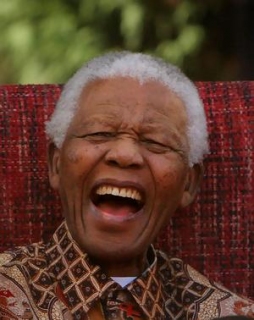
Mandela: A Lesson in Greatness and Grace By Okey Ndibe

Commentary

Nelson Mandela
Last Thursday, South Africa’s President Jacob Zuma stood behind a podium and addressed his country. “Our beloved Nelson Rolihlahla Mandela, the founding President of our democratic nation, has departed. He passed on peacefully in the company of his family around 20h50 on the 5th of December 2013. He is now resting. He is now at peace.
“Our nation has lost its greatest son. Our people have lost a father. Although we knew that this day would come, nothing can diminish our sense of a profound and enduring loss. His tireless struggle for freedom earned him the respect of the world.”
There was no tinge of hyperbole in Mr. Zuma’s announcement. It would be quite difficult to inflate who Mandela was, what he represented. If anything, President Zuma’s speech was a model of graceful, self-assured understatement, wholly befitting the character and nature of the man whose passage Mr. Zuma so movingly announced.
Instead of “Our nation has lost its greatest son,” Mr. Zuma might have said “Our continent,” and he would have been right. Indeed, he could have said, “Humanity has lost its greatest son” – and few would have argued with him. It’s hard to find any other political or social figures of the 20th century deserving of being bracketed with Mandela. The man South Africans endearingly called Madiba – a mark of eminence in the late leader’s ethnic group – towered above most of his fellow giants of our time.
By all accounts, Madiba Nelson Mandela was a transcendent human, peerless in dignity and integrity. He was a beautiful soul, part of that rare species sent, once in every long while, to dwell among us. Part of his mandate, it seemed, was to offer the rest of us a glimpse of the magnificent heights that are possible for humanity.
In 1994, Mandela assumed office as South Africa’s first-ever elected president. That achievement was almost unprecedented in history, one of the few times a man would bridge the wide divide between Prisoner and President. Mandela’s investiture as president was the amazing culmination of years of struggle by blacks to achieve full citizenship in their nation. That struggle had been marked by much violence. Since the late 1940s when the doctrine of racial segregation known as apartheid began to formalize itself, the machineries of state power – the police, secret police, and the military – had targeted the forces opposed to that state-sanctioned, anti-human policy. Many anti-apartheid activists, blacks, whites and coloreds, were tortured, assassinated, detained, jailed or forced into exile. Most of the victims had little or no public visibility. No newspapers, magazines, radio or TV told their stories. It was as if they suffered anonymously, their agonies unremarked, their graves unmarked.
Yet, many other crusaders against apartheid were recognizable, in South Africa and beyond. They included Mandela, Robert Sobukwe, Ruth First, Steve Biko, Walter Sisulu, Helen Guzman, and Chris Hani. Of these, Mandela’s narrative would ultimately achieve centrality, seizing the world’s imagination. That Mandela became representative in this way did not imply that he and he alone waged and won the war against apartheid. Instead, his story managed to contain themes or elements of the broader, collective struggle. These themes included intrepid defiance, a willingness to make the ultimate sacrifice, the ceaseless deployment of the intellect to expose and denounce the self-evident evils of racial injustice, and the projection of undying hope in the dawn of a new South Africa.
Not even the most inveterate of Mandela’s critics would question his extraordinary commitment to the cause of the anti-apartheid struggle. Fewer still would deny the severity of the personal price he paid. He spent twenty-seven of his 95 years in prison, many of those years in extremely harsh conditions. On several occasions, the apartheid regime had offered a condition or two to end his incarceration. If Mandela would pledge to end his advocacy for black equality in South Africa, he would be let go. Each time, Mandela rejected the bait.
In doing so, he stayed faithful to his ideal. At his sentencing in 1964, an unremorseful Mandela had delivered a speech that must rank as one of the most rousing by any prisoner of conscience in history. “I have fought against white domination, and I have fought against black domination,” he told the court. Then he continued: “I have cherished the ideal of a democratic and free society in which all persons live together in harmony and with equal opportunities. It is an ideal which I hope to live for and to achieve. But if needs be, it is an ideal for which I am prepared to die.” With those words – as well as other words he uttered before and after being jailed – Mandela proved himself “President of the Republic of Morality.”
Mandela was a radical, but not in any predictable sense of that word. He was a revolutionary, but not of the kind that exhorted aggrieved mobs to take up machetes, spears and guns and set upon their oppressors in an orgy of blood-letting. Instead, he embraced the radical idea that any wrong, however grave, could be forgiven.
In 1994, after South Africa’s made him the custodian of state power, Mandela could have embarked on a witch-hunting spree, seeking out and punishing erstwhile tormentors of black South Africans. He could have declared an open season on the privileged white minority. Instead, Mandela envisioned a post-apartheid South Africa devoid of bitterness and recrimination. He sought to start rebuilding his society on the foundations of racial harmony and a shared dream.
He inspired the Truth and Reconciliation initiative as a key step in healing the festering sores of the apartheid era. Whether that initiative was a great success, or merely a formula for masking injustices, remains an ongoing debate. To his credit, though, Mandela was not beholden to a soft, sentimental, naive notion of forgiveness. Instead, he insisted, as a first and imperative step, that those who committed crimes against their fellows must step forward to confess, abhor their crimes, and ask for forgiveness. No question, it was a far from perfect way of addressing the tortures, deaths and myriad injustices of apartheid. But there’s no denying that the policy’s largeness of heart and nobility helped South Africa to avert the prospect of a blood-soaked transition.
History will be kind to Mandela. Generations yet unborn will be inspired by the vision and generosity of Mandela, a man whose lined, affable face, sparkling eyes, and sunny, avuncular smile made him one of the globe’s most recognizable faces. His lean, athlete’s physique seemed to bespeak his discipline and moderation, an ascetic lifestyle.
How do you capture in words the sheer moral majesty, ethical splendor, and grace of a man who spoke with the clarity of a prophet and the deep humanity of a healer? How extol a man who realized that personal freedom was inadequate, if not a dud; that true freedom lay in laboring to free others shackled by power, ignorance, poverty or disease? How does one fete a man who spoke eloquently about the nobility of forgiveness – and then matched his words with action?
To a world fixated on vengeance and retribution – with a certain punitive conception of justice – Mandela brought the gospel of forgiveness and reconciliation. On a continent whose “leaders” are wedded to the idea of their indispensability, where every ideal is subordinated to the desire for perpetuation in office, Mandela had the disciplined restraint to limit himself to a single term in office. Nobody ever accused him of (ab)using his office to accumulate a personal fortune.
On learning about Mandela’s death, South Africans, Africans, and the world stood still to mourn the fall of a veritable human Iroko. For years and decades to come, long after rapacious crooks who pass themselves off as leaders have been buried and (instantly) forgotten, the world will continue to celebrate Mandela’s fine life, shining ideals and transforming legacy. We won’t soon forget how lucky we were that an exceptionable man called Nelson Madiba Mandela dwelt among us, enriched our lives, in fact elevated and defined our time.

Farewell, Madiba!

Tuesday, December 10, 2013

Nelson Mandela death: World mourns South Africa's first black president

Mourners sing outside the home of former South African President Nelson Mandela in Johannesburg on Monday, December 9. The revered statesman, who emerged from prison to lead South Africa out of apartheid, died on Thursday, December 5. Mandela was 95.Mourners sing outside the home of former South African President Nelson Mandela in Johannesburg on Monday, December 9. The revered statesman, who emerged from prison to lead South Africa out of apartheid, died on Thursday, December 5. Mandela was 95.
HIDE CAPTION
World reacts to Mandela's death
<<
<
1
2
3
4
5
6
7
8
9
10
11
12
13
14
15
16
17
18
19
20
21
22
23
24
25
26
27
28
29
30
31
32
33
34
35
>
>>
Johannesburg, South Africa -- South Africans mourned the death of their first black president, weeping, singing and gathering near Nelson Mandela's homes and other landmarks linked to him nationwide.Send us your stories, memories and photographs of the Nobel Peace prize winner and former South African president.
Mandela, 95, died Thursday in Johannesburg.
"We will always love Madiba for teaching us that it is possible to overcome hatred and anger in order to build a new nation and a new society," President Jacob Zuma said Friday, referring to the revered statesman by his clan name.
In Soweto township, where Mandela lived before he was imprisoned for 27 years, giant posters of his face adorned streets. Residents surrounded his former red brick house on a busy street and sang songs of freedom.
On the grass near Mandela's home in the Johannesburg suburb of Houghton, children spelled out with rocks "We love you Mandela."
Others wept, lit candles and sang in celebration of a life well lived.
Tributes planned
A state funeral will be held December 15 in his ancestral hometown of Qunu in the Eastern Cape province.
Before the funeral, various events to honor him are planned in major cities.
Sunday will be a national day of prayer and reflection, and people will gather in places of worship to pray and meditate, Zuma said.
The evolution of Nelson MandelaThe evolution of Nelson Mandela
Pres. Obama reflects on Mandela's impact
Ex-wife: We interacted through prison bars
The five lives of Nelson Mandela
The official memorial service will be held Tuesday in First National Bank Stadium in Johannesburg.
And his body will lie in state at the seat of government in Pretoria from Wednesday through next Friday.
Zuma announced the death late Thursday in a nationally televised address.
"Our nation has lost its greatest son, our people have lost a father," he said. "Although we knew that this day would come, nothing can diminish our sense of a profound and enduring loss."
In recent years, Mandela had battled health issues that included multiple hospitalizations for treatment of a recurring lung infection.
Many South Africans didn't get the news until Friday morning.

"I woke up and was shocked when I saw it on television," said Wilson Mudau, a cabdriver in Johannesburg. "It's sad, but what can we do? Let him rest in peace. It's time ... Madiba has worked so hard to unite us.

Thursday, December 5, 2013

Nelson Mandela, anti-apartheid icon and father of modern South Africa, dies

Nelson Mandela, the prisoner-turned-president who reconciled South Africa after the end of apartheid, died on Thursday, December 5, according to the country's president, Jacob Zuma. Mandela was 95.Nelson Mandela, the prisoner-turned-president who reconciled South Africa after the end of apartheid, died on Thursday, December 5, according to the country's president, Jacob Zuma. Mandela was 95.
HIDE CAPTION
Revolutionary and politician Nelson Mandela
<<
<
1
2
3
4
5
6
7
8
9
10
11
12
13
14
15
16
17
18
19
20
21
22
23
24
25
26
27
28
29
30
31
>
>>
 Nelson Mandela, the revered statesman who emerged from prison after 27 years to lead South Africa out of decades of apartheid, has died, South African President Jacob Zuma announced late Thursday.
Mandela was 95.
"He is now resting. He is now at peace," Zuma said. "Our nation has lost its greatest son. Our people have lost a father."
"What made Nelson Mandela great was precisely what made him human," the president said in his late-night address. "We saw in him what we seek in ourselves."
Mandela will have a state funeral. Zuma ordered all flags in the nation to be flown at half-staff from Friday through that funeral.
Mandela, a former president, battled health issues in recent months, including a recurring lung infection that led to numerous hospitalizations.
With advancing age and bouts of illness, Mandela retreated to a quiet life at his boyhood home in the nation's Eastern Cape Province, where he said he was most at peace. He was later moved to his home in the Johannesburg suburb of Houghton, where he died.

Despite rare public appearances, he held a special place in the consciousness of the nation and the world

Monday, November 25, 2013

Michael Jackson Killed Himself —Doctor

Doctor Conrad Murray, personal doctor of the late King o Pop, Michael Jackson, has disclosed in an exclusive interview with the Dail Mail of London that the singer killed himself by taking an overdose of his drugs.

Murray who was convicted of killing Michael Jackson spoke out for the first time to try to clear his name, claiming that the superstar died of an accidental overdose.
“I did not kill Michael Jackson. He was a drug addict. Michael Jackson accidentally killed Michael Jackson,” Murray stated.
The 60-year-old heart surgeon, released from prison three weeks ago, having served half of his four-year sentence for involuntary manslaughter, began working for Jackson in 2006.
But it was not until he went to help him prepare for his This Is It come-back tour in 2009 that he saw the devastation of his life.
“He was in crisis at the end of his life, filled with panic and,” he said.
“By the end Michael Jackson was a broken man. I tried to protect him but instead I was brought down with him.”
Murray claims Jackson had been dragged “into the abyss” of physical and mental anguish by the pressures of the tour.
He claims he lived in a state of paranoia and filth: maids were not even allowed to take his underwear to be laundered because he feared they would sell it.
Murray insists he was one of the few people the superstar trusted. “You want to know how close we were? I held his penis every night to fit a catheter because he was incontinent at night.”
The doctor said Jackson’s 5’11” frame had wasted to little over nine stone, he was suffering from chills, insomnia and mood swings and he was dependent on the prescription drug propofol to help him sleep.
Murray claims he had ‘weaned’ Jackson off the drug the singer called ‘milk’ only days before his death on June 25, 2009.
He believes his insomnia that night was due to withdrawal symptoms from another drug, Demerol, an analgesic better known as pethidine, which had been provided by another doctor without his knowledge.
In a claim, made for the first time, Murray insists that while he was out of the room Jackson got up and injected himself with a lethal dose of propofol after Murray had refused to give him the amount he wanted.
The heart surgeon claims he did everything he could to save Jackson. Whether or not you believe him, he has clearly convinced himself.
He says the singer had told him shortly before his death that their names would become ‘inseparable.’ When Murray asked him what he meant ‘he smiled and said: ‘I am clairvoyant.’
Murray has filed an appeal against his conviction.

Protest Against Discrimination And Molestation Of African Passengers By Turkish Airline Personnel In Istanbul Airport

Protest Against Discrimination And Molestation Of African Passengers By Turkish Airline Personnel In Istanbul Airport

By Nze Louis Asuzu
Photo credit: www.turkishairlines.com
I wish to use this medium to protest against the undignified treatment been accorded to black African passengers who boarded the Turkish airline flight TK 1883 at Istanbul airport on the 5.11.2013 scheduled for 08.10 to Vienna, Austria.
I have been living in Austria for over 25 years and presently the president of a formidable Nigerian Diaspora association registered with the Austrian government. Though this is not my first time of travelling with Turkish Airline, in fact I was one of the 
first passengers to travel with Turkish Air on the route Vienna-Lagos-Vienna few years ago when the Airline opened this route.
I travelled to Nigeria with my 11-year-old son for a traditional Chieftancy program. Due to his school, he left earlier unaccompanied back to Austria. I was supposed to come back two weeks later. But as fortune will have it, I had to promptly break my stay due to health problems within my immediate family.
At the Turkish Airline office in Lagos Murutala Mohammed international airport, I was allowed to re-book and change my ticket for a cash payment of 52,500 naira. All plead to pay less or to pay in other currency since I did not have such amount in naira proved effort less. But at last I over came that hurdle.
At the Istanbul international airport, we had to first go through three immigration checkpoints and two security zones before finally arriving at the Turkish airline-boarding counter 312.
I observed that the lady checking in the passengers stopped every Black African before me and paid extra attention in checking their travelling documents.

She carefully crosschecked and annoyingly double-checked their passports before dropping them aside as if it meant nothing. Without any word and regards she signaled the passengers to wait by the side of the counter with just a hand wave. Meanwhile she boarded the white skinned passengers without subjecting them to the same treatment.

When it came to my turn, she gave me a cold look while she was examining my traveling document. After minutes of examining and scanning them, she started questioning me in German. She asked me rudely in broken German if I could speak German and where I was living, which I answered. But it seemed that she did not understand German well.
She set aside my documents like the one from other fellow Black Africans and waved me to the side.
I patiently waited to be attended to for about three to four minutes. Then I went to a second officer seating in another desk close to the check in counter to inquire on why I should be treated in this manner because I did not want to disturb the boarding of other passengers.
Meanwhile, two ladies of Austrian nationality decided to intervene. They explained to her and the two other officers that they had been at the check in desk and they had seen what had happened, that I had answered the lady’s questions correctly and that they had been only embarrassing me.

A Turkish gentleman who also felt ashamed and disturbed at the attitude of these officers and intervened was immediately subjected to maltreatment. His Austrian visa was photo copied he later told me that they were threatening him with some other actions. He said he is a regular passenger with the airline and was sure going to write a petition against his maltreatment by these officers. He gave his identity as Mr. Murat Murdua an employee of Siemens international (murat.murdua@siemens.com).
I was threatened with not being allowed to board the flight as scheduled. And when I asked a third officer to please disclose the identities of the officers involved, they told him not to, while they went on to rain more threats on me.
I demand an apology and that the Turkish airline management will address this issue.

CC
Turkish Airline Wien
Nigerian Embassy, Vienna
Global Reporters Vienna
PRO NANCA 

"Black Sunday for Rochas Okorocha"

The Catholic Archbishop of Owerri Ecclesiastical province, His Grace, Anthony Obinna, Sunday morning took Governor Rochas Okorocha of Imo state to the cleaners when he told the governor to his face that he has lost touch with the reality and essence of governance.

It was the annual special Corpus Christi service of the Catholic church and Okorocha had decided to worship at the Assumpta Cathedral but the service really went sour for him, his wife and his entourage when Obinna’s sermon zeroed in on his administration and tore it to shreds right before the governor.

The fiery cleric told Okorocha in unambiguous terms that he was using state allocations as though they were his personal fund. While inferring that Okorocha’s government has since disconnected from the governed, Obinna warned Okorocha to retrace his steps before the wrath of God falls on him.

While the entire congregation were still shouting and clapping in support of the dress-down of the governor, Archbishop Obinna capped his message to Okorocha by reminding him that, “People of Imo state are still waiting for the fulfillment of your campaign promises.”

By this time, the face of the Governor, his wife’s and that of the members of his entourage were a study in embarrassment, as the Governor was visibly rankled and ruffled.

Apparently sensing the state of affairs, Archbishop Obinna denied Okorocha the right of reply.

Hear him: “I know the Governor would want to reply, but he should go home in a prayerful mood, for today is not for talking too much.”

It would be recalled that Nkechi Okorocha, the wife of the Governor, also received her own dose of dress-down last week from the fiery cleric.